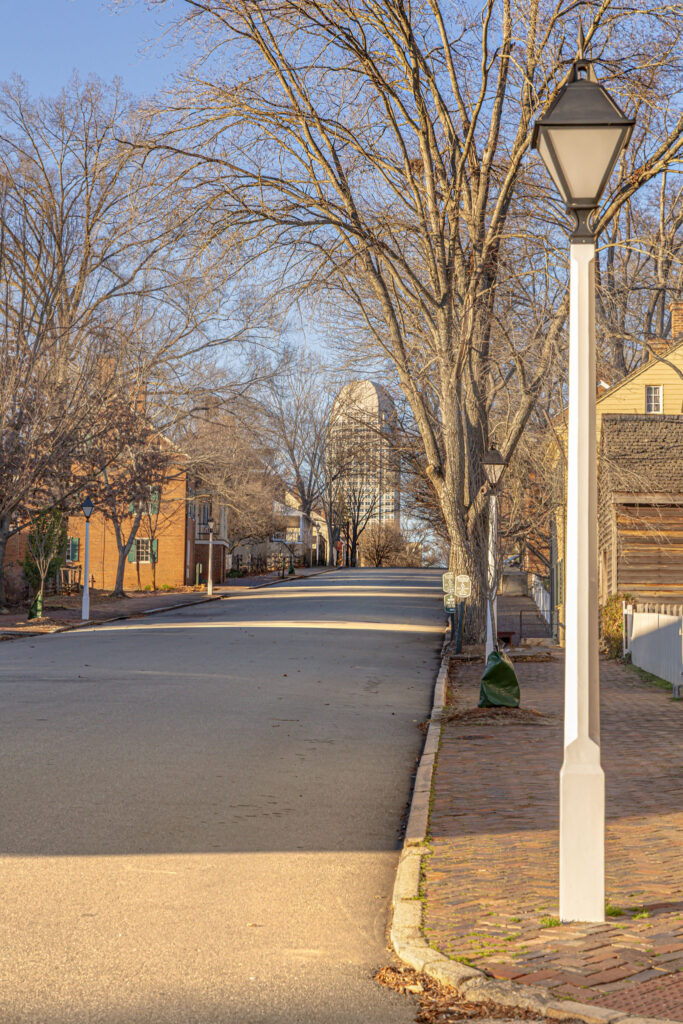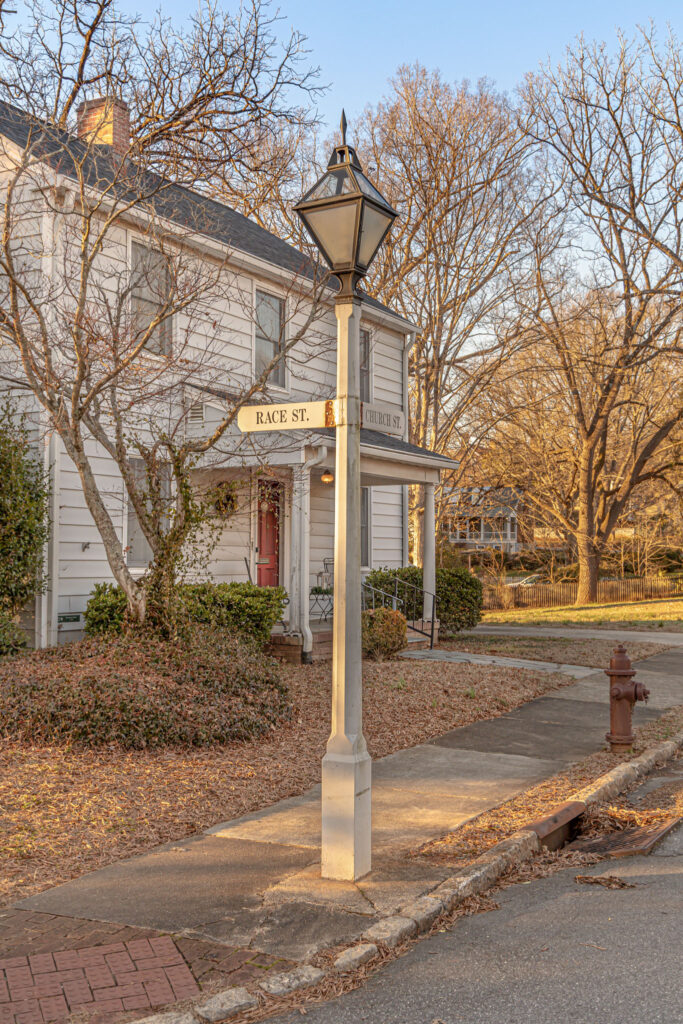
The intersection of Race Street and Church Street sits within the original footprint of Salem, founded by Moravian settlers in 1766. The town was deliberately planned, with streets laid out to support religious life, education, and industry. This area reflects that structure clearly.
Race Street is named for the mill race that once carried water from Salem Creek. The channel powered Salem’s early mills, providing mechanical energy essential to the settlement’s survival and growth. Though the mill race no longer exists, the street preserves its location and function within the town’s industrial system.
Church Street served as one of Salem’s primary north–south routes. It bordered Salem Square and connected major religious, educational, and communal buildings. Movement along this street was part of daily life—linking homes, places of worship, and institutions central to Moravian society.
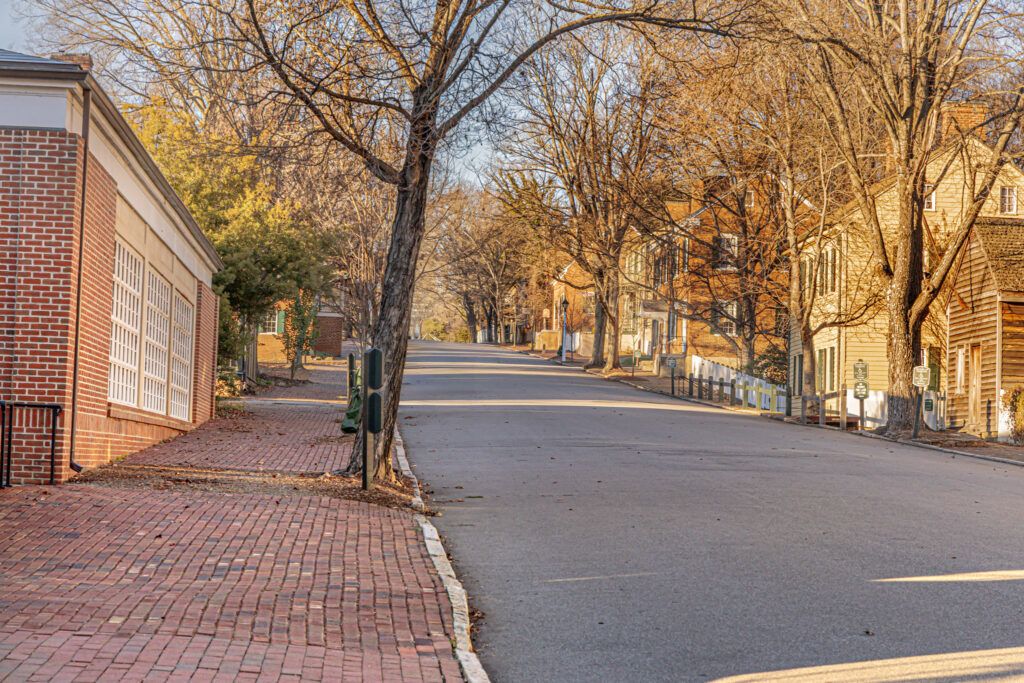
At the corner of these streets stands St. Philip’s Moravian Church, constructed in 1861 for the African American Moravian congregation. It is the oldest surviving African American church building in North Carolina. In 1865, shortly after the Civil War, emancipation was announced from its pulpit, marking a significant moment in the local history of freedom and citizenship.
Together, these streets illustrate how Salem functioned as a working town. Industry, religion, and community were not separated but physically and socially intertwined. The buildings and street alignments that remain provide a direct record of that organization.
These photographs document a place where design followed purpose—and where history remains legible in the landscape.